Showing posts with label bmw. Show all posts

Wednesday, October 23, 2013

2011 BMW ALPINA B7

 
 First offered as a limited edition in 2007 and 2008, BMW Alpina B7 will be joined again BMWs line-up as the model 2011. This will be based on the BMW 7 Series platform and will be sold in the spring. Official debut will be in February at the Chicago Auto Show.
BMW Alpina B7 is equipped with V-12 engine, which has a strength equivalent to 438 horsepower (horsepower). With a combination of technology, cylinder engine with Valvetronic V8 plus and compressor, according to the manufacturer may boost its power to 500 horsepower.
With Valvetronic, the output power regulation system on the intake-valve can be "inflated". Suppose that the 4.4-liter capacity could send power 325 hp at 6100 rp every acceleration, and torque up to 330 lb-ft at 3600 rpm.
With the addition of supercharging (compressor) on the Alpina B7 engine, plus turbocharging, this engine is capable of changing the strength of the combustion products into extra energy.
A compressor helps the engine to move more quickly, while the turbocharger drive the flow of combustion. With the concept of this engine room, relatively clean burning with the results of more refined engine sound. Not only that with Valvetronic regulating, the result of burning fuel more efficiently.
 
On the outside there is a deeper front air dam and rear decklid spoiler, sporty exhaust system with two tailpipes integrated into the rear bumper and 21-inch, 20-spoke Alpina wheels. Interior fitted with Alpina blue illuminated doorway trims, the SWITCH-TRONIC steering wheel in LAVALINA hand-stitched leather, and the Black Panel instrument cluster-branded LCD screen with Alpina.BMW Alpina B7 is based on the state of the art technology, adaptive suspension of the 7 Series, including Dynamic tuned Damping Control and Active Roll Stabilization, with the demanding requirements of high-performance sedan. Long gone are the days when pure "hard and sporty" ride was much sought-after attribute set-up suspension. Struggling to totally neutral handling continues to be the destination, resulting in the best of what technology is feasible. In pursuit of this goal, shorter and reduce the unique calibrated springs front and rear ride height by 15mm each and 10mm. Dynamic Damping Control and Active Roll Stabilization allows the driver to select from three different suspension set-up: Comfort, Normal and Sport. It feels deliberately calibrated to provide a different set-ups, affect the characteristics of the dampers, Active Roll Stabilization and parameters of power steering assist, throttle response algorithms and load-reversal damping. Sport-Plus mode automatically shifts the system Dynamic Stability Control to Dynamic Traction Control (DTC). This allows much more slip on the driven wheels and delaying intervention by the traction control system.
The inside features a blue sedan B7 Alpina illuminated door trims, the SWITCH-TRONIC steering wheel in LAVALINA hand-stitched leather, and the Black Panel instrument cluster-branded LCD screen with Alpina. Exclusive luxury interior wood trim in the form of Myrtle Burl, Burl piece of Laurel is only found in the United States Pacific Coast, providing a warm and traditional atmosphere. Piano Lacquer Optional Alpina interior trim with silver diagonal rhombs, offers a modern alternative.
Alpina emblems adorn metal secretly seatbacks for Comfort standard leather seats and wood inlayed in trim. additional car indentifying plaque is mounted on the inside of the right roof panel at the front door of the sun.


Read more »

Friday, October 18, 2013

BMW 1 Series M Coupe Crash

We now have the second mishap regarding the Bavarian firms turbocharged sports model.

This accident took place in Poland when the driver reportedly lost control of the 340HP rear-wheel drive BMW sending the small coupe to the side of the road and into the grass. Fortunately for the owner, no other car was involved in the incident and the exterior damages appear to be fairly limited.
Of course, there may be hidden damages under the body but it could have been worse.


PHOTO GALLERY


Read more In Cars
Read more »

Sunday, October 13, 2013

2013 BMW M6 Convertible Price 113 995

The 2013 BMW M6 Convertible is one of the latest version of the 2013 BMW. Here today at the 2012 New York Auto Show, the 2013 BMW M6 Convertible is making its public debut with sales to start later this year just in time for summer. The 2013 BMW M6 Convertible price at $113,995.

The 2013 BMW M6 Coupe will arrive in late summer and will be priced at $106,995. The 2013 BMW M6 Convertible is powered by a 4.4 liter V8 engine with M TwinPower Turbo Technology making 560 hp at 5,750 – 7,000 rpm with a peak torque of 500 lb-ft between 1,500 and 5,750 rpm. Mated to a 7-speed M Double Clutch Transmission with Drivelogic, 0 to 62 mph comes in at 4.3 seconds. The 2013 BMW M6 Convertible side profile is streamlined and slick as you’d expect.

The 2013 BMW M6 Convertible three-dimensional front fenders feature familiar M gills, wide chrome frames and indicator bars with the M logo. The 2013 BMW M6 Convertible has some wider wheel arches and of course the 19-inch M light-alloy wheels in seven double-spokes in a two-tone finish. As an option you can also get 20-inch M light-alloy wheels in five slender double-spokes. The 2013 BMW M6 Convertible engine has been equipped an Active M Differential that helps the car working with high precision and speed. Its control unit is connected with the Dynamic Stability Control (DSC) system via FlexRay high-speed data transfer technology and constantly cross-checks the data collected by its sensors with the feedback from DSC.

Read more »

Saturday, October 12, 2013

Wunderlich “MadUSA” Built from a BMW S1000RR


Wunderlich “MadUSA”. Built from a BMW S1000RR
-

Wunderlich, which is the American distributor for German aftermarket parts, joined BMW Motorcycles of San Francisco to create this amazing beast. And why is it called "MadUSA" (pictured above)? Wunderlich first created the Mad Max (pictured below), which had Continental TKC 80, in Germany, but to sell it in the States they kept the Mad and added the USA for an obvious reason.
Basically this bike is a BMW S1000RR with about €12.500 ($17.000) of extras, not counting labor and painting. But for that price you get an Öhlins FRRT 811 fork, TTX shock, Sportego Bar Conversion Kit, Piranha Conversion Kit (bodywork), Remus exhaust system, among many other expensive parts.
Yet the engine is unmodified. It produces 173hp at around 13.000rpm and has a maximum torque value of 103Nm (76lb/ft) at 10.550rpm. This is good for a top speed of 285km/h or 177mph if you live in the U.S.A..
Source: cycleworld

Read more »

Saturday, September 28, 2013

2013 BMW M6 Gran Coupe Review Price Engine Specifications

 Specification image modification exterior interior price review 2013 BMW M6 Gran Coupe
welcome to Neonista.blogspot.com website that provides a variety of information about the latest cars in the world. and this time we will share information about the 2013 BMW M6 Gran Coupe, the following information 
 The powertrain technology under the skin of the BMW M6 Gran Coupe guarantees the performance characteristics for which M Automobiles are renowned. The V8 engine with M TwinPower Turbo technology produces 412 kW/560 hp. Its technical wizardry includes a pair of twin-scroll turbochargers, a cross-bank exhaust manifold, High Precision Direct Petrol Injection, VALVETRONIC variable valve timing and Double-Vanos continuously variable camshaft control. The 4,395 cc unit keeps peak torque of 680 Newton metres (502 lb-ft) on tap between 1,500 and 5,750 rpm, while maximum output is developed between 6,000 and 7,000 rpm. The engine revs to a maximum of 7,200 rpm. The BMW M6 Gran Coupe sprints from 0 to 100 km/h (62 mph) in 4.2 seconds on the way to an electronically governed top speed of 250 km/h/155 mph (305 km/h/189 mph if the optional M Driver’s Package is specified). Average fuel consumption in the EU test cycle stands at 9.9 litres per 100 kilometres (28.5 mpg imp) and CO2 emissions are 232 grams per kilometre.

 Taking care of power transfer is a seven-speed M Double Clutch Transmission with Drivelogic. The transmission’s electronic management system ensures the right gear is selected for optimum traction. It also offers the driver a Launch Control function for maximum acceleration, Low Speed Assistance for extra comfort and the Auto Start-Stop function to enhance efficiency.


 The standard equipment fitted on the BMW M6 Gran Coupe includes 20-inch M light-alloy wheels, leather trim, heated driver and front passenger seats, automatically dimming rear-view and exterior mirrors, an alarm system and the BMW Professional radio with hi-fi loudspeakers. Available as an alternative to the standard 2-zone automatic climate control is a 4-zone system with a control panel in the rear compartment. Among the other highlights of the options list are M multifunction seats, heated rear seats, Comfort Access, a heated steering wheel, the Soft Close Automatic function for the doors, electrically operated sun blinds, the new generation of the Professional navigation system and a Bang & Olufsen High End Surround Sound System.

The BMW M6 Gran Coupe also comes with a variety of BMW ConnectedDrive features, such as an M-specific BMW Head-Up Display, Park Distance Control, a rear-view camera, High Beam Assistant, Speed Limit Info, Lane Change Warning, Lane Departure Warning, Surround View and BMW Night Vision with pedestrian recognition. Customers can also integrate their Apple iPhone or other smartphones into the car and make use of internet-based services while on board.


such information from us about the 2013 BMW M6 Gran Coupe may be useful for you. and if you want to look for your new car references, please visit this website again. thank you.
Read more »

Sunday, September 22, 2013

BMW 320d v Audi A4 2 0TDI v Merc C250 CDI


Despite their recent updates, the Audi A4 2.0TDI and the Mercedes C250 CDI are outclassed by the all-new BMW 320d. Read on to find out why.


 BMW 320d v Audi A4 2.0TDI v Merc C250 CDI


  Welcome back to the German-dominated luxury compact saloon arena. BMW’s sixth-generation F30 3-series is out in the market and we pit it against the recently facelifted Audi A4 and the Mercedes C 250 CDI.
The three cars you see here come with the most popular engines in their respective model ranges. The four-cylinder diesels under all three hoods have all the performance you expect from a German saloon and won’t blow a hole in your wallet every time you tank up. Simply put, they make functional and financial sense.
 
And nothing makes more financial sense here than the Audi A4. At Rs 29.64 lakh (ex-showroom, Delhi), it is the most affordable by far, but it is also the least powerful of the trio. The Mercedes C 250 CDI, on the other hand, is the most powerful, and in this AMG Performance Edition spec, is the most expensive too. At Rs 35.94 lakh, it costs Rs 70,000 more than a standard C 250 CDI. The 320d in Luxury spec slots neatly between the two at Rs 31.5 lakh. So, will the A4 prove powerful enough, can the Merc justify the extra money in the face of its rivals, or has the new 3-series taken the game even further ahead?
 
The face of things
 
Sure the 320d looks the most contemporary – it is the newest, after all. The new F30 further blurs the lines between the 3-series and the larger 5-series. In fact, from the rear three-quarters, it looks exactly like a scaled-down version of the 5. The new front, however, is the most interesting bit of the car. It’s replete with complex curves, and the clamshell bonnet and flatter kidney grille follow the design cues of the latest Bimmers.
 
The Audi, over time, has gotten new LEDs, a hexagonal grille, a new chin and a slight nip and tuck all over. It’s simple, minimalistic and handsome. The Merc is the extrovert, thanks to the AMG body kit. The sporty wheels, bulging wheel arches, low skirts and faux diffuser at the rear will make you think there’s a growling V8 under the hood. Take away the body kit and the C’s curvier headlights, three-slat grille, oversized Merc star and classic ‘power saloon’ stance still make it quite the looker.
 
Most will also agree that the new 3-series no longer looks compact. But, then again, the specs reveal the A4 to be the longest and widest and the C-class the most compact. The C-class also has the shortest wheelbase, and the BMW the longest (it’s just 2mm more than the A4’s though).
 
 Inside story
The Merc immediately impresses with its build quality. The doors shut with all the solidity of a bank vault and there’s a certain heft to everything. The beautifully layered door pads, the sporty steering wheel and the black-and-silver-themed cabin tell you that you’re in something special. If we were to pick faults, it would be with small details like the cheaply finished steering-mounted controls and the fact that the Merc’s COMAND driver interface is nowhere near as the ones in the 3-series and the A4. Also, apart from the three-spoke steering wheel and the dials, the rest of the dashboard looks pretty conventional, with a whole lot of buttons cluttering up the centre console.
No such qualms with the Audi – the crisp dials and large display between them are the best-looking of the lot, and the MMI system also has the nicest interface of the three. Fit and finish are exceptional and the beige theme and four-spoke steering wheel point to the Audi’s relaxed nature. In fact, it is the Audi’s cabin that feels the brightest and broadest here.
The 3-series’ cabin is unmistakably BMW and is the best-looking of the three. Impressive bits include the thick-rimmed steering wheel, the 5-series-like dashboard layout and the large display for all the iDrive functions. The front seats are by far the most comfortable of the lot. Unlike the flatter and harder buckets in the A4 and C-class, the new 3-series’ seats offer far better cushioning and all-round support. The driving position is the best too and, like all BMWs, the centre console is tilted towards the driver.
However, cabin quality isn’t much of a step up from the outgoing 3-series and, like before, the buttons on the dashboard are too small and fiddly to use. But to make up, the iDrive controller, with its sub-menus and brilliant graphics, is extremely user-friendly.
At the rear, the 3-series wins again. It has the best legroom and the seats are the most supportive and comfortable. The A4 has decent legroom too, but loses out because it is a bit short on thigh support, whilst the C-class’ rear seat feels the most cramped. Also, the seat base is noticeably shorter in the Merc than in the others and the all-black theme doesn’t give you a feeling of spaciousness. All three cars are best as four-seaters; the high transmission tunnels and rear air-con vents discourage carrying an extra passenger.
All three have usefully big boots, but it’s under the boot floor that the big differences lie. The 3-series obstinately sticks with run-flat tyres, so there’s no spare. The A4 gives you the safer option with a space-saver, and the C-class is the safest bet with a full-size spare.
All three cars come with eight airbags each, apart from a whole gamut of features to keep you safe in the event of a collision. And just as you’d expect, all of them also come loaded to the brim with features. Apart from xenon headlamps, powered seats and automatic climate control, they all get Bluetooth mobile connectivity for their audio systems. But while the BMW and Audi feature reversing cameras, the Merc relies on sensors to guide you while parking. That said, the C 250 CDI is also the only car here to feature electric adjustment for the steering and twin sunroofs that allow lots of light to enter the cabin. However, the Bimmer, in Luxury trim, wins itself a few brownie points by offering a fully functional satellite navigation system.


The business end
Sheer bragging rights belong to the C 250 CDI with its 2.2-litre twin-turbo diesel engine. It is the biggest engine here and makes 204bhp and a healthy 51kgm shot of torque. But the C 250 CDI is slower to 100kph than the 320d because it weighs more and the BMW makes full use of its closer-stacked gear ratios. It’s only near 150kph that the Merc catches up with the 320d, and then its extra lungs kick in to get to 200kph a whole two seconds before the BMW. The C 250 CDI’s power and torque, combined with the relaxed seven-speed auto, make it especially effortless, and this is even more true in the higher gears, where its sustained thrust is something to revel in. But there are a few hiccups, the first being the gearbox’s reluctance to follow commands fed in via the paddle-shifters. Most of the time, the gearbox is reluctant to respond, the electronics choosing to follow throttle inputs and engine revs rather than frantic tugs at the paddles. Press a small button marked ‘M’ (for manual mode) and it gets better, but is still nowhere near as responsive as the 320d’s eight-speed auto.
The 320d’s gearbox response feels as quick as a twin-clutch unit, without the associated jerkiness, and that makes it one of the best automatics around. There’s a tiny delay when you mash the throttle, but once the power kicks in, the upshifts are smooth and seamless.
Though it beats the C 250 CDI in the dash to 100kph by a scant 0.14 seconds, in the real world, the 320d’s responsive nature makes it feel much quicker. It’s clearly the best performer, and when you consider that BMW’s 1995cc diesel motor is 23bhp down on power, it makes it even more impressive.
The A4 2.0 TDI is completely outclassed by the other two – it makes a mere 141bhp and 32.63kgm of torque. In reality, however, that’s more than adequate. The A4 is equipped with an eight-step Continuously Variable Transmission (CVT), and as boring as that might sound, it isn’t. The gearbox has been programmed to behave like a regular automatic and the way it shifts gears will convince you there’s a set of gears deep inside its guts. It’s only when you ask for a kickdown in ‘normal’ mode that it displays that ‘rubber-band’ effect that you usually get from CVTs.
As expected, it is nowhere near as fast as the other two in a straight line – the engine runs out of steam a lot earlier than they do – but for everyday driving, it has enough grunt for this to not be a huge issue. It is responsive, willing to downshift to make the most out of its limited power, and very linear in its power delivery.
You can see the A4’s unstressed nature in the way the engine is the quietest and smoothest. Its vocal range never exceeds ‘muted purr’ and it’s smooth enough to trick you into believing it’s running on petrol. The 320d’s engine, on the other hand, is gruff and quite audible when it’s happily revving to its 5000rpm redline, but settles down to a murmur when you’re cruising. It’s the C-class’ engine that literally makes the most noise about how much power it’s pumping out. It sounds very gruff when accelerating and, even when you’re cruising, you can hear a distant drone from under the hood.
Both the 320d and the C 250 CDI come with overt fuel-saving tech like stop-start systems, and the BMW goes one up by having an ‘Eco Pro’ driving mode that even controls the working of the climate control. The A4 relies more on stuff like reduced internal friction for the engine and the CVT to squeeze the most out of every litre.
When it’s time to brim the tanks, the 320d claims another crucial victory. It was the most fuel efficient in the city (we ran it in Eco Pro mode), returning 11.1kpl. On the highway, the BMW proved the most frugal again, sipping a litre for every 15.5km. The A4 2.0 TDI was not too far behind, returning 10.9kpl and 15kpl respectively while the C 250 CDI was the least efficient, drinking 10.1 and 14.3kpl for the same city and highway cycles.

Brute or ballerina?
At low speeds, it’s the A4 that feels best over bumps and bad roads. You could even describe the ride as pillowy, and this goes well with the laid-back nature of the car. However, up the speed a bit and the A4 is less composed. The body wallows and pitches excessively and never settles down to the flat ride you expect from a German car.
The 320d doesn’t have adjustable dampers like the European-spec version, but despite this omission, the overall ride quality is simply outstanding. The suspension is tuned to be on the softer side and hence, at city speeds, the BMW is almost as pliant as the A4 and equally comfortable. At higher speeds, there is some vertical movement, but the overall body control is far better than the A4’s. As a result, the 320d feels much better planted than the Audi and inspires far more confidence too.
What’s annoying with both these cars, though, is the way the suspension rattles over sharper bumps.
The C-class, by contrast, is stiffer at low speeds with sharp, vertical movements over uneven surfaces, but go faster and the ride becomes supremely flat. Switch the adjustable dampers (exclusive to the AMG edition) into Sport and there’s a noticeable difference in the way it handles. On the harder setting, the C 250 CDI is unshakeable at any speed and has fantastic poise. The steering doesn’t feel particularly precise, but it’s got a wonderfully fluid feel to it that you only get with a traditional, hydraulically powered system.
However, it’s the 320d that provides the most thrills, and this is mainly down to the brilliant chassis balance and relatively quick steering. The BMW feels more agile than the other two and is more eager to change direction. It rolls a bit more than the C-class and mid-corner bumps can unsettle it a bit, but that’s a trade-off you get with softer suspension.
The A4 is the least sporting of the three – it doesn’t have trick dampers and its front-wheel-drive architecture doesn’t encourage spirited driving either. There’s decent grip, but lower power and the fact that it rolls and pitches too much make it more suited to a relaxed driving style.
Around town, it’s the A4 that’s the easiest to drive thanks to good visibility and its light steering. The BMW and the Merc cabins make you feel more cocooned but, on the flip-side, their thick, raked pillars limit visibility.


Crunch time
In the end, the A4 makes a good case for itself as the office commuter. It’s a great car to drive around town, thanks to its soft ride and light steering. The smooth and silent engine adds to its user-friendly demeanour. The rear seats are spacious, the cabin is airy and the understated looks are still classy. But ask more of it and the A4 will fall short. Smaller, cheaper saloons can embarrass it off the lights, it isn’t as capable as the others at higher speeds and it isn’t particularly exciting to drive either.
The C 250 CDI tries to win you over with its sheer grunt, unflappable poise and solid build, but again, the engine is the least refined, it isn’t as spacious as its rivals and, frankly, the C-class is now getting a bit long in the tooth.
The new 3-series, in comparison, is an outstanding all-rounder. The generous seats and absorbent ride make it the most comfortable to sit behind the chauffeur in. When you want to play, the brilliant performance and entertaining handling are a cut above the others too. Sure, the engine may not be the quietest around and interior quality isn’t a big step up, but these things are easily overlooked when you see how complete and well-rounded the rest of the car is. Factor in the stunning looks and best-in-class fuel economy, all of which are yours for a price tag that is not over the top, and the 320d’s value proposition only gets stronger.
It’s an easy victory for BMW, which has gone on to set a new benchmark in this class.

Read more »

Friday, September 20, 2013

Ducati Multistrada 1200 vs BMW R 1200 GS

Ducati Multistrada 1200 vs BMW R 1200 GS


Poor roads, and often the equivalent of no roads are common across India. Crumbling infrastructure nationwide ensures ample terrain for rugged motorcycles like Ducati’s path-breaking Multistrada 1200 and BMW Motorrad’s trusty R 1200 GS to tackle and conquer. Certainly, few other motorcycles makes more sense in this country, than adventure-tourers like these, born and bred to deal with every possible environment.

Provided you can afford them, this pair represents the crème-de-la-crème of motorcycles on offer in India today. We bring these European rivals face-to-face in a no holds barred duel to find out which is the best of the best?

Dashing or sober, take your pick

The Ducati Multistrada 1200 and BMW’s R 1200 GS are both large, pretty tall motorcycles, each with individual character. The Ducati is decidedly sportier, oozing an Italian air of flamboyance, while the Beemer looks relatively sober and industrial, a more appealing bike to mature motorcyclists who’ve had their fill of sportsbikes.

The Multistrada comes with a sharper snout, led by twin intake vents and sleek headlights, while the GS has a more practical face with its asymmetrical headlight cluster. Both motorcycles provide manually adjustable visors, a boon when pushing either of these bikes over 140kph, which they are so easily capable of. Space age, digital instrumentation and a keyless ignition system wow you on the Mustistrada, where the GS sticks more to the conventional, using comparatively ho-hum, still easy on the eye analogue dominated instrumentation.

Ideal motorcycles for your Himalayan dream ride, touring the frozen landscapes of Ladakh or any other mountainous terrains of Northern India, both rugged motorcycles attempt to keep you comfortable through every eventuality, with heated grips, knuckle protection and reach adjustable levers. Indian riders will prefer the simpler Multistrada switches, which isn’t to say much is wrong with the solid, built to last GS controls, barring their cumbersome individual turn signal switches.  

Both motorcycles offer superb tank grip, comfortable riding saddles and the option of ample pannier space, the Mutistrada looking stylish despite when handicapped with their extra bulk. Exposed rear wheels add zing to both sturdy motorcycles.

The GS fails to match the panache that’s yours for the asking on the Mustistrada, as seen in its exposed trellis frame flanks, smart belly scoop and stubby silencers, but, the GS likewise enjoys a forte of its own. Like any BMW bike, you get the feeling a GS can outlive its owner, with such terrific overall quality and fit-finish as to make even the high quality Multistrada seem a notch lower.

Twin treats

Both motorcycles use distinctive four-stroke engines, the Multistrada’s (1198.4cc) installed as an L-twin with desmodromic valve actuation, while the R 1200 GS (1170cc) sticks to BMW’s traditional ‘boxer’ format, a horizontally opposed twin. Fuel-injection is standard, although the Multistrada is liquid-cooled, transferring its 150bhp via chain drive whereas the air-and-oil cooled GS puts down 110 horses through shaft drive. Although the Multistrada and GS are both content to toodle around and mingle with city traffic at low speeds thanks to their meaty torque curves, the GS enjoys an advantage in being smoother. The Multistrada has a more hard-edged, raw feel to it that’s always goading you to give it some gas. The Multistrada’s 12.1kgm of peak torque spins free at 7500rpm, outdone by the GS’s flat-twin that liberates 12.23kgm at 6000rpm.

Both big bikes go with hydraulic clutch operation and six-speed gearboxes. The clutch and gearshifts offer slick, smooth action on the Beemer, these still positive and precise but calling for more effort to operate on the Ducati.

You can’t help but fall for both motorcycle’s exhaust tones, the Ducati sportier where the BMW strikes a smoother, more sedate note. In fact, everything about the R 1200 GS’s engine is just so much more relaxed, the Multistrada giving you this more direct, exciting feedback that’s evident in the cracking response its ride-by-wire throttle feeds your wrist, especially in ‘Sports’ mode, where the engine mapping is at its aggressive best.

The GS rocks playfully to the right when given a blip of its throttle at idle, but stick it in gear, dial in some throttle, and you find yourself cresting an unending wave of liquid-smooth power, as the bike pulls seamlessly through its broad, flawless power band. The Multistrada feels more a sportsbike than adventure-tourer when shown the whip, lightening its front end while effortlessly distorting all its surrounding scenery into one big blur. Traction control can be had on both powerful motorcycles, the Multistrada offering this in eight varying stages of assist depending on the riding mode you choose, ‘Sports,’ ‘Touring,’ ‘Urban’ or ‘Enduro.’

The Multistrada is the bike to own if speed is your thing, as performance runs riot through its all Italian veins, this powerful motorcycle easily able to jostle the GS into its mirrors, then well beyond their reach as it accelerates hard, satiating all your high speed thrills.

The GS offers a different kind of experience, as it roars along with a refined, gentlemanly politeness the Ducati can never match.

Two-wheeled hovercrafts

Motorcycle riding positions don’t come more commanding than on the Ducati Multistrada 1200 and BMW R 1200 GS. These tall steeds seat their riders in near identical, higher than regular, upright positions that are certain to impress you. You feel the master of these machines, arms stretching out to their wide handlebars.

Frames and suspension setups are electronically controlled on both motorcycles provided you buy top of the line models. The Ducati uses a combination of a magnesium sub-frame ahead of its steering column, a steel-trellis around the engine and a cast alloy brace to hold its single side, alloy swingarm. Electronically controlled, fully adjustable Ohlins suspension comes with the Multistrada 1200 S, which uses upside-down telescopic forks and a monoshock at the rear.
On the Beemer you get a twin section frame, BMW Motorrad’s signature Telelever five-way adjustable suspension with a single strut in front, a single side, alloy swingarm and fully adjustable Paralever rear suspension.

ABS is available for both bikes, and disc brakes are standard.

You can alter damping to suite the terrain, or your riding style and ride quality simply doesn’t get any better than astride both these capable motorcycles, the Multistrada and GS capable of gliding over potholes, cocooning their riders so well as to keep them just as cosseted as atop a magic carpet. Both seats are broad enough to offer superb support, but the Multistrada drops a wee bit short of matching the softer BMW’s saddle.

There’d be few Indians who would actually take these bikes off-road, but Indian roads often being just as good as riding off-road is what makes them so sensible for us. Find a well surfaced highway though, and the Multistrada starts shining through. Its superior performance is complemented by lighter, sharper handling, which has the BMW feeling heavier, never as quick to turn in and really struggling to keep up when having fun scything through twisty tarmac. The Multistrada corners as well as—if not better than—expected from a motorcycle of this segment, while the GS does feel relatively reluctant to play catch up in the corners. Wide handlebars on both bikes provide excellent leverage when negotiating congested conditions.

The Ducati comes with tailor made multi-compound Pirelli tyres, where the BMW sticks with Metzeler rubber, footprints that generate prodigious grip for both machines with ample stopping power always at hand to haul these motorcycles down safely from high speed. Front end dive is reduced on the BMW thanks to its innovative Telelever suspension, but all said and done, we’d never hesitate to choose the Ducati over the Beemer as our date to the handling prom.

Can’t go wrong with either

You require forcing our backs to the wall, and then aiming a gun at our temples before we pick one from these truly top-class motorcycles for you, for few bikes, if any can match the practical sense both these Adventure-tourers provide on Indian roads.

The Multistrada offers razor sharp performance, adequate comfort, accomplished handling and all of it with panache to make it stand out as the singularly most outstanding motorcycle anyone could own in India. The supremely refined R 1200 GS is perhaps the only other model we would consider the day we got tired of this Ducati, and looked around for something less aggressive, more mature as well as user friendly on our roads.

Now, if only Ducati and BMW Motorrad could look at the Indian market with stronger commitment, to lower their stratospheric pricing on both brilliant motorcycles to a more affordable level.

Read more »

Monday, September 16, 2013

BMW to launch X1 facelift on Feb 14


Updated BMW X1 to sport refreshed styling and will get a more powerful diesel engine.

BMW to launch X1 facelift on Feb 14

BMW is all set to launch the updated X1 here on February 14.

To give the car a more upmarket appearance, BMW has carried out a whole slew of styling tweaks on the X1. The front gets a more heavily contoured bumper, an altered grille featuring silver slats, more pronounced sockets for the round fog lamps and a completely redesigned lower section finished with a silver accent.

The headlamps retain the same familiar shape as those used on the existing X1, but receive new internal graphics, including LED corona ring main beam lights as an option. Further back, it gets reshaped exterior mirror housings carrying side repeater lights. The rear receives a restyled bumper, which like the one up front, has been lightened visually by the adoption of more body coloured surfaces and a larger silver scrub-plate element. 

Inside, the X1 adopts a lightly reworked centre console, high gloss air vents and a new range of optional trim elements. On the mechanical front, the X1 is set to get more powerful versions of the current engines and a new eight-speed automatic gearbox.
Read more »

Wednesday, September 4, 2013

2014 BMW i3

BMW unveiled the new 2014 BMW i3 in New York, Beijing and London, which is able to be on the market from autumn 2013.

2014 BMW i3
2014 BMW i3

The BMW i3 has now unveiled the production version of his first BMW i model, which will connect the emission-free mobility with the typical BMW driving pleasure. The futuristic look of the i3 study could completely save it in the series and differs only in minor changes of the concept vehicle.

It is surprising also that the counter-opening doors were included in the series. By eliminating the B-pillar, access to the rear is much easier.

The i3 offers a passenger compartment made from carbon fiber reinforced plastic (CFRP), which, together with many other lightweight components for the electric cars that weighs only 1195 kg on the scale.

Powered the first electric vehicle from BMW i by a 170 hp (125 kW) electric motor that has a maximum torque of 250 Nm and power transfer to the rear wheels via a single-stage gearbox.

2014 BMW i3

The power applies to the electric motor of lithium-ion storage cells, which are integrated into the subfloor. This has the i3 has a very low center of gravity, which he will also shine with a perfect road holding.

The i3 is 399.9 inches long, of course, also provide for the well-known BMW driving pleasure and have in addition to the optimal driving characteristics also compelling performance.

Via fast charging stations can be charged 80% of the battery in just 30 minutes. The i3 can also be charged via any standard wall outlet, BMW also offers the BMW i wallbox at home on.

At the request of the BMW i3 can also be equipped with a specially developed for the i-Series BMW ConnectedDrive navigation system which allows the electric operation through optimized routing and also displays all charging options.

2014 BMW i3

The interior of the i3 is designed as futuristic as the exterior. Both the instrument unit as well as the 6.5 or 8.8-inch Control Display of the iDrive system are designed as free standing displays.

Start of the new BMW i3 priced at 35,700 €, already included in the price are the iDrive control system, Professional radio, air conditioning, auxiliary air conditioning, a telephone speakerphone and a rear parking aid.

Optionally, there is among other things the Range Extender, the BMW ConnectedDrive services, LED lights, an electric glass roof, automatic climate control, comfort access and driver assistance systems such as the Driving Assistant Plus, the park or Assistant, Speed ​​Limit Info.

2014 BMW i3

2014 BMW i3

2014 BMW i3

2014 BMW i3


Read more »

Friday, August 30, 2013

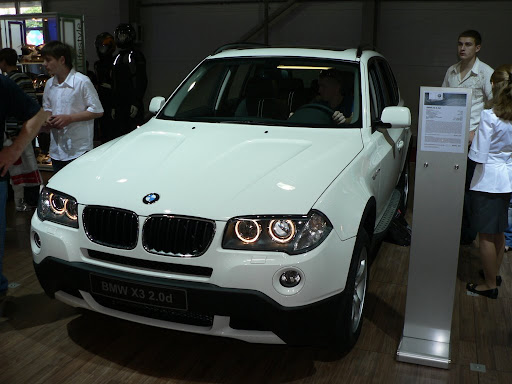
New Cars BMW X3 2 0d with wallpapers

New Cars BMW X3 2.0d with wallpapers
BMW X3 2.0d (2008) CAR review
Previously untouchable in the premium compact SUV segment, the BMW X3 now finds itself with some impressive competition. Audi has the Q5 and coming over the hill, looking like a monster, is Mercedes’ GLK. Both are based on newer platforms than the X3 and offer serious, credible alternatives. Can BMW’s baby premium 4x4 still match up?


Isn’t the BMW X3 starting to feel a bit old now?
Would you believe the X3 only dates to 2004? Evolution has, however, left this BMW behind. Unlock or start the car and you immediately notice you’re using a metal key. Climb aboard and there’s no iDrive – though some may see that as a blessing – while all the main dials and switchgear are shared with the Z4 and look dated.
Read more »

Wednesday, August 28, 2013

BMW 335i with Specification and pictures

BMW 335i with Specification and pictures
There are cars we same, and then there are cars we jazz. Cars we equivalent get respectable reviews. Cars we bed win 10Best awards. After subsidisation 10Best trophies to the BMW 3-series for the antepenultimate 19 eld in a row, it’s light that we’re in couple, flush through fourfold generations and mold changes. Of pedagogy, every difference prefabricated to the 3 could move, or level defeat, its unequalled bear but subtle styling updates and the phasing in of new technologies change never diluted the driving undergo for which the model’s celebrated.
BMW 335i
BMW Announced that the brand new 325i and the ever more anticipated twin-turbo BMW 335i will arrive in Australian BMW showrooms in October. Not that long now! The new BMW 335i assumes top position in the 3 Series family thanks to its innovative 3.0-litre Twin Turbo petrol engine that delivers a huge 225 kW of power at 5,800 rpm and a massive 400 Nm of torque between 1,300 rpm and 5,000 rpm.
Read more »